Do you experience severe headaches?
Do you have pain or clicking when opening and closing your mouth?
Do you have issues chewing or biting?
If you experience any of these issues, like millions of other adults, you may need TMJ treatment. Our Minnesota Craniofacial Center team has years of experience and expertise in treating patients with TMJ disorders. Let us help you experience pain-free living.
What is TMJDysfunction ?
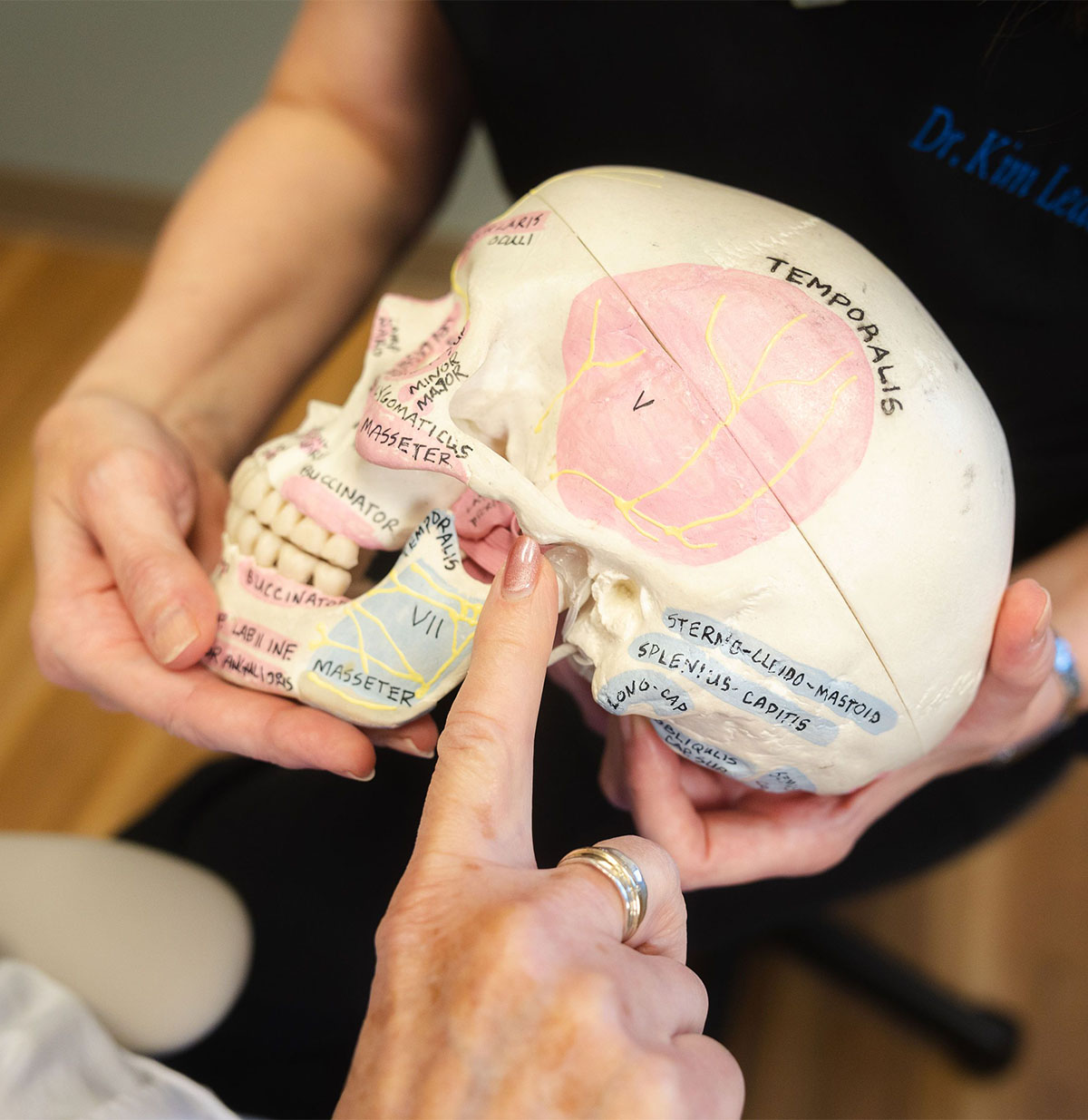
The temporomandibular joints (TMJ) on either side of your head connect your jaw to your skull, allowing your jaw to function properly when opening and closing your mouth, chewing, and speaking. Because they can move in many different directions (forward, back, sideways), these joints are some of the most complex in your body. Inflammation of the jaw joint or other issues with these joints is called TMD or temporomandibular disorder.

Symptoms of TMJ Disorders.
TMJ disorder symptoms can manifest in a variety of ways, and some may seem to be unrelated to the jaw.
- Pain in your jaw, face, neck, and ears
- Migraine-like headaches
- Pain and pressure behind your eyes
- Pain, clicking, or popping when opening and closing the mouth
- This is usually caused by a shifting of the disk inside the joint. Clicking does not necessarily mean a TMJ issue. However, if the clicking also includes pain or limited jaw function, like the jaw getting stuck open or closed, it’s probably a symptom of TMD.
- Jaw issues, like your jaw feeling out of joint or sore muscles
- This is usually felt in the cheeks and temples where the jaw-closing muscles live. Morning soreness and stiffness often mean you’re clenching and/or grinding your teeth at night.
- Difficulty chewing or biting down
- Swollen face
Common Causes of TMJ Disorders .
TMJ disorders can develop from a variety of physical and lifestyle factors. Injury or dislocation to the jaw or joint can disrupt normal function and cause pain. Teeth clenching or grinding is often triggered by stress and can cause excessive strain on the jaw joint. Poor posture can lead to jaw misalignment and contribute to chronic tension surrounding the muscles. Misalignment of the teeth or jaw can create uneven bite pressure, which forces the joint to compensate elsewhere, causing dysfunction and pain.
Benefits of TMJ Treatment.
- Pain Relief
- Long-term Oral Health
- Improved Quality of Life
PersonalizedSolutions.
Appliance Therapy
As part of your treatment, we may use custom oral appliances or orthotics to help protect the jaw and support healing, recovery, pain reduction, and stability.
Physiotherapeutic Techniques
Manual therapy, therapeutic exercises, stretching, and myofascial release are all techniques to improve mobility, reduce tension, and correct poor movement. We address posture and coordination through physiotherapy to relieve symptoms and help prevent recurring TMJ issues.
Regenerative Therapies
Regenerative therapies are designed to support the body’s natural healing and repair processes. Depending on your individual needs, treatment may include prolotherapy, platelet-rich fibrin (PRF), exosomes, or targeted laser therapy. These approaches can be used to support connective tissues and joint function, promote healing, and help reduce discomfort as part of a personalized treatment plan.
PRF Injections
PRF (platelet-rich fibrin) is a concentration of your own platelets and growth factors in your blood used to accelerate tissue repair. Using a small sample of blood, we inject PRF into the joint to deliver a boost of regenerative proteins to support healing and degenerating or inflamed tissue.
Therapeutic Injections
Targeted injections can address areas of discomfort in the muscles, tendons, ligaments, and joints. Depending on your specific needs, we may use anesthetic blends or platelet-rich fibrin (PRF) to support pain relief, healing, and improved function. These treatments can be used alongside other therapies as part of a personalized approach to care.
Therapeutic
Laser Treatments
With targeted light energy, we reduce pain, decrease inflammation, and correct dysfunction in the jaw joint. Therapeutic lasers penetrate deep to stimulate cellular repair and improve circulation. This no-downtime treatment is often used alongside other treatment solutions to enhance results.
Botox®
For certain conditions, Botox® can be an effective adjunct to other therapies. By targeting overactive jaw muscles, it may help reduce muscle tension and excessive pressure on the TMJ, providing relief from associated jaw pain and discomfort.
Unlocking
In cases of acute closed lock, the cartilage disk can become displaced, limiting the jaw’s ability to open properly. Jaw mobilization, along with other therapies, can often help release the restriction, improve movement, and assist in unlocking the jaw.
Collaborative Care
We understand that complex conditions often require a team approach to support long-term stability. When appropriate, we collaborate with and refer to other healthcare providers to ensure your care addresses your individual needs from multiple perspectives.
Home Care
Practical at-home routines can reduce the strain on the TMJ. Heat or ice application, jaw exercises, stress management, dietary changes, proper posture, and sleep position adjustments can reduce symptoms and relieve pain. This allows you to actively engage in recovery and long-term wellness.
TMJ FAQs& Resources.
Generally, no. TMJ discs click as they go in and out of place. If they stop going back into place, they often stop clicking. Jaw movement may be restricted to some extent when this happens, but pain levels may actually diminish for a short time. Ignoring this condition increases the risk of arthritic changes inside the joints.
That is not entirely possible to predict. Many people wear an appliance for at least a few days or weeks on a full-time basis and then are able to taper down to nighttime wear only. Continuing nighttime wear can help prevent the original disorder from coming back.
Some people need, or choose to have, orthodontic treatment done to align their bite when their TMJ treatment is complete. This is only necessary for a small minority of the people we treat, but it may be an option.
Replacement TMJ joints are available, but provide extremely limited jaw function. They are only used in cases of severe loss of natural jaw structure.
Surgery is a last resort for the treatment of TMD. TMJ surgery is not predictable and many people get worse instead of better following such procedures.
FeelYour Best.
Please call (651) 642-1013 or request an appointment online to set up your first visit. We’ll be in touch soon.