
Published
Why TMJ, Migraines, and Jaw Pain Happen Together
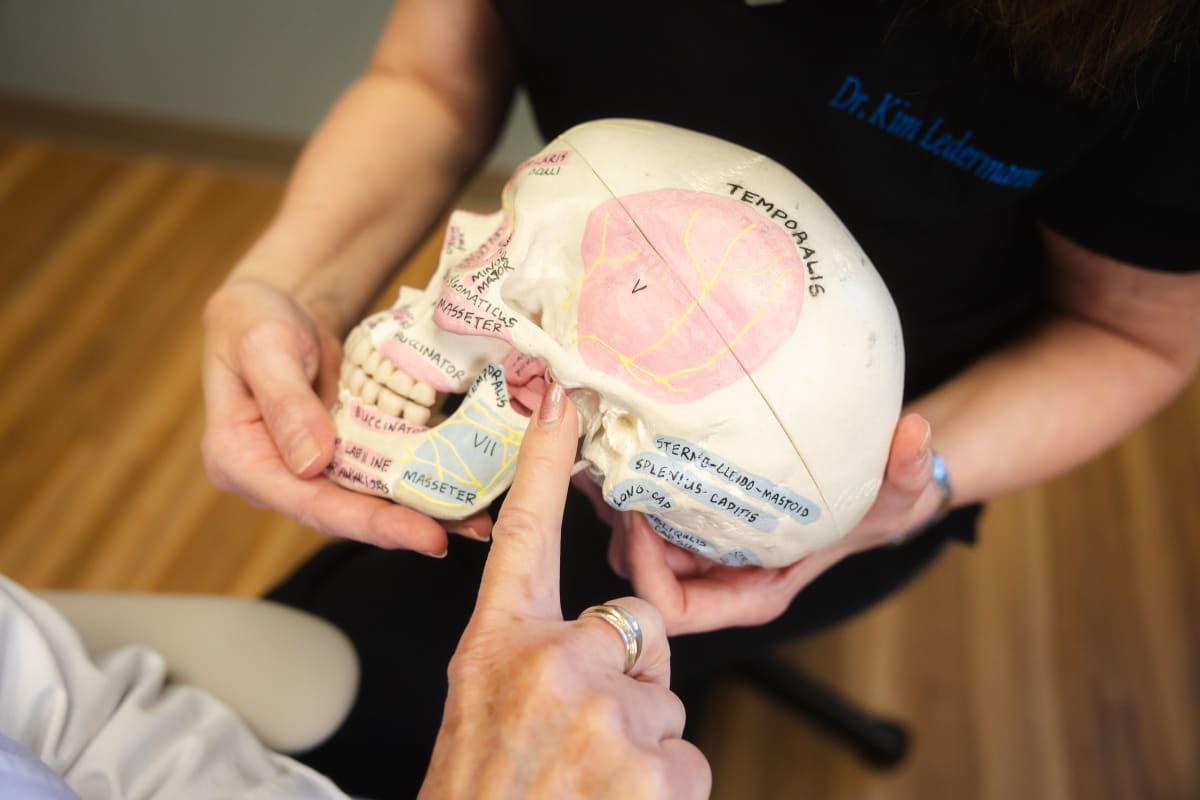
If you have been to a neurologist, a dentist, an ENT, and your primary care doctor, and each one explained only part of what you feel, you aren't alone. Jaw pain, headaches, and TMJ dysfunction cluster together because they share the same nerve;—specifically, the trigeminal nerve, which carries sensation from your jaw joint, chewing muscles, teeth, temples, forehead, and the area around your eyes into one brainstem relay.
When the jaw and its muscles are under sustained strain, that relay gets flooded, and the brain can misread where the trouble is coming from. Pain that starts at a joint the size of your thumbnail shows up behind your eye, inside your ear, or across the back of your skull.
Dr. Ledermann and the team at Minnesota Craniofacial Center see this every week: people told their symptoms do not fit any one specialty, who have quietly concluded they will just have to live with it. You are not out of options, and your symptoms are not scattered. They follow a map, and this guide walks through it. To get started, call our Saint Paul office at (651) 642-1013.
What this guide covers
Here is the route this guide takes, in order.
- The jaw joint itself: how it moves, what the disc does, and what "dysfunction" actually means mechanically.
- The nerve wiring: the trigeminal system, referred pain, and central sensitization, in plain terms.
- Root causes beyond stress: clenching, bite, injury, posture, hormones, and genetics, and how they stack on top of each other.
- The full symptom cluster, including the signs that need urgent attention rather than another round of research.
- Sleep breathing: a partly blocked airway can drive nighttime grinding and morning headaches, and why evaluating the airway is just as important as evaluating the jaw.
- Whole-body pain patterns: fibromyalgia, chronic fatigue, and what they change about a treatment plan.
- Conditions that imitate TMD: migraine, trigeminal neuralgia, cervicogenic headache, sinus disease, dental infection, and neck disorders, and how a thorough orofacial pain evaluation tells them apart.
- What to do next after years of fragmented care, and what a coordinated evaluation in Saint Paul involves.
How the Jaw Joint Works and Where Things Go Wrong
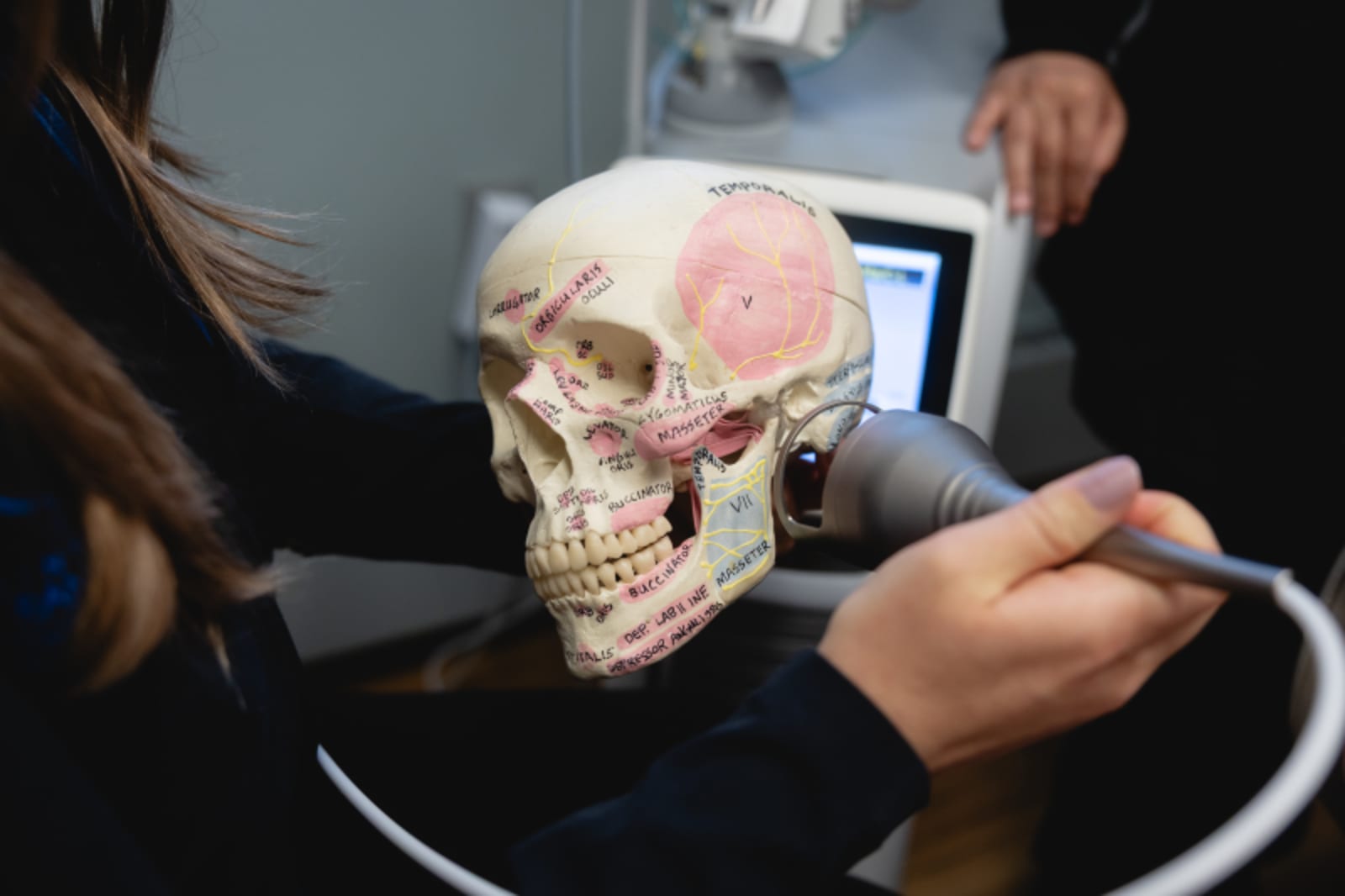
Put your fingertips just in front of your ears and open slowly. That movement under your fingers is the temporomandibular joint, and you have one on each side. It is the only joint in your body that cannot move independently of its partner, which is why a problem on one side almost always recruits the other.
A hinge that also slides
For the first inch or so of opening, the joint rotates like a hinge. Past that, the whole condyle (the rounded top of your lower jaw) translates forward, sliding down a slope of bone so you can open wide enough to yawn or bite an apple. That dual motion is what makes the joint so capable and so vulnerable.
The disc: a small cushion doing a big job
Between the condyle and the skull sits a disc of dense fibrous tissue that cushions load and is supposed to travel with the condyle as the jaw opens and closes. When ligaments stretch or the joint takes repeated overload, the disc can slip forward and sit ahead of the condyle instead of on top of it.
That displacement has two common versions. In one, the condyle snaps back onto the disc partway through opening, and you hear or feel a click, sometimes a second click on closing. In the other, the disc no longer recaptures at all, and the condyle runs into it like a doorstop.
Opening gets limited, often to two fingers' width or less, and the joint may feel stuck. Imaging tells us which pattern you are dealing with, and our TMD and TMJ disorder care starts with that answer rather than a guess.
The muscles do most of the talking
In the majority of TMD cases, the muscles are a bigger pain generator than the joint. The masseter along your jawline, the temporalis fanning across your temple, and the pterygoids tucked deep behind the jaw are built for short bursts of chewing, not for hours of sustained clenching. Hold any muscle at low-grade contraction long enough and it develops taut bands and trigger points, loses blood flow, and starts referring pain elsewhere. Muscle pain like this often responds to therapeutic injections and photobiomodulation therapy alongside appliance work.
Those muscles coordinate with the muscles of the neck and upper shoulders every time you swallow, speak, or stabilize your head. That connection is a large part of why jaw dysfunction so rarely presents as a simple sore jaw, and why so many people end up describing headaches, ear pressure, and neck stiffness instead.
What Causes TMD in the First Place: Clenching, Bite, Trauma, Posture, and Genetics
TMD is rarely one cause. It is usually a stack of contributing factors, some of which you were born with and some of which accumulated. That is why two people with identical scans can have completely different symptoms.
Parafunction: clenching and grinding
Chewing loads your jaw muscles in short bursts. Clenching loads them continuously, often for hours, often without you knowing. Daytime clenching tends to be stress-linked: jaw resting with teeth together while you drive, scroll, or concentrate. Nighttime grinding is driven by sleep arousals rather than emotion, which is why our dental sleep medicine evaluation often matters as much as anything we do for the jaw itself. Signs include flattened or chipped tooth edges, scalloped indentations along the sides of your tongue, ridges of thickened tissue inside your cheeks, and jaw muscles that ache worst in the morning.
Bite and jaw structure
Bite is a contributing factor, not the villain it was once made out to be. Plenty of people with imperfect bites never develop symptoms. What matters more is whether your structure asks the muscles to work harder to hold a comfortable position: a significantly retruded lower jaw, a narrow upper arch, a deep overbite, missing back teeth that leave the joint carrying load it was not designed for, or a bite changed by past dental work.
Trauma
Direct injuries are the obvious ones: a blow to the jaw, a fall, a sports impact. Indirect trauma matters just as much and is easy to overlook. Whiplash from a car accident injures the same territory. So can prolonged wide opening during a long dental procedure, an intubation during surgery, or a difficult wisdom tooth extraction. If your symptoms began within weeks of an event like that, bring it up when you schedule an evaluation so it can be investigated rather than dismissed.
Posture and head position
Your head weighs roughly as much as a bowling ball. Carry it forward of your shoulders for hours a day and the muscles at the back of your neck work continuously to keep it from dropping, while the position subtly changes where your lower jaw rests and how your teeth meet. Posture alone rarely causes TMD, but it is a reliable amplifier and a common reason symptoms flare during heavy desk or screen weeks.
Joint conditions, hormones, and genetics
Osteoarthritis affects the TMJ as it does other joints, particularly with age or after long-standing disc displacement. Inflammatory arthritis, including rheumatoid and psoriatic arthritis, can involve the joint directly. Generalized joint hypermobility, including Ehlers-Danlos syndrome, means looser ligaments everywhere, and a joint that depends on ligaments to keep its disc in place does not tolerate that well. TMD is diagnosed more often in women, particularly during reproductive years, and research points to genetic differences in pain processing and inflammatory response as part of why some people develop chronic symptoms from the same insult that leaves others fine. Sorting out which of these apply to you is the work of a thorough TMD evaluation rather than a single scan.
The Full Symptom Picture: Ear Pain, Clicking, Tooth Pain, Dizziness, and Neck Tension
TMD often goes years without a name because most of its symptoms do not sound like a jaw problem. Here is the recognizable cluster:
- Ear symptoms with normal ear exams. Fullness, pressure, aching, tinnitus that changes with jaw movement, occasionally muffled hearing. The joint sits millimeters from the ear canal and shares nerve supply with it.
- Joint noise. Clicking, popping, or a gritty crepitus. Noise on its own is common; noise plus pain, catching, or restricted opening warrants evaluation by a TMD specialist.
- Limited or crooked opening. Trouble getting three fingers between your front teeth, a jaw that deviates to one side as it opens, or episodes of locking.
- Tooth pain with no dental cause. A tooth that aches or feels sensitive while exams and X-rays come back clean, sometimes migrating between teeth. This is referred muscle pain, and it has led to root canals and extractions on healthy teeth.
- Headaches with a jaw signature. Pain in the temples, over the eye, or at the base of the skull, often worst on waking or after chewing tough food.
- Facial pressure that mimics sinusitis. Fullness across the cheeks and under the eyes, with negative sinus imaging and antibiotics that never quite help.
- Neck, shoulder, and upper back tension that returns within days of every massage or adjustment.
- Dizziness and imbalance. Lightheadedness or unsteadiness, tied to the sensory input from the upper cervical muscles that helps your brain judge head position.
- Sleep disruption and morning exhaustion, often mentioned last and the one that matters most. When it appears alongside grinding or snoring, our dental sleep medicine evaluation looks at the airway as well as the joint.
Symptoms that need prompt medical attention
Most jaw pain is not dangerous, but some presentations need to be ruled out quickly. Get evaluated urgently for:
- A sudden, severe headache unlike anything you have had before.
- Headache with fever, neck rigidity, confusion, or a new rash.
- New neurological changes such as weakness, drooping, slurred speech, or vision loss.
- Jaw pain brought on by exertion with chest, arm, or shoulder discomfort or shortness of breath, which can be cardiac.
- A jaw that will not close, with swelling and fever, suggesting infection.
- Numbness of the lower lip or chin that appears without explanation.
- A first severe headache beginning after age 50.
Say these things plainly to a clinician rather than adding them to a symptom diary. Once anything urgent has been ruled out, Dr. Ledermann, Dr. Green, and Dr. Cervenka can sort the rest of the picture out with you at our Saint Paul office.
Sleep, Breathing, and Bruxism: The Airway Connection Most Patients Never Hear About
If you wake up almost every morning with a headache and a tight, tired jaw, the explanation may have less to do with stress than with breathing.
Why grinding often starts in the airway
Sleep bruxism is not primarily an emotional habit. It is largely tied to brief arousals from sleep, and one of the most common reasons for repeated arousal is a partly obstructed airway. When the tongue and soft tissues collapse back during sleep and airflow drops, the body responds with a surge of arousal and muscle activity, including in the jaw muscles. Thrusting the jaw forward physically opens the airway, so grinding can act as a protective reflex: your body clenching its way to a breath.
Treating grinding as a habit and covering the teeth with plastic protects enamel but does nothing about the reason the jaw is firing at 3 a.m. If the airway is the driver, the arousals continue, the sleep stays fragmented, and the morning headaches keep arriving. That is why a TMD evaluation should include questions about your nights, not just your bite.
The morning headache pattern
A headache present on waking that eases within an hour or two usually points to hours of muscle overuse from bruxism, to drops in blood oxygen and disrupted sleep from sleep-disordered breathing, or to both together. Add daytime sleepiness, snoring, waking gasping, frequent trips to the bathroom overnight, dry mouth on waking, or a bed partner who has noticed pauses in your breathing, and the case for looking at sleep gets stronger.
What evaluation and treatment can look like
Sleep-disordered breathing is diagnosed with a sleep study, either in a lab or with a validated home test, and interpreted by a physician. Treatment options include CPAP therapy, oral appliances that hold the lower jaw slightly forward to keep the airway open during sleep, positional therapy, weight management, surgical airway procedures, and myofunctional therapy to retrain tongue and orofacial muscle patterns. Dr. Ledermann's dual training in dentistry and speech-language pathology sits directly on this intersection of airway, muscle function, and swallowing.
If nobody has asked how you sleep, an important piece of your picture has not been examined.
When Jaw Pain Is Part of a Bigger Pattern: Fibromyalgia, Chronic Fatigue, and Widespread Pain
For some people, the jaw is one region in a body that hurts in many places. TMD shows up frequently alongside fibromyalgia, myalgic encephalomyelitis/chronic fatigue syndrome, irritable bowel syndrome, chronic pelvic pain, chronic low back pain, tension-type headache, and migraine. Researchers group several of these as chronic overlapping pain conditions, and they share a common thread: a nervous system that has become amplified in how it processes sensory input.
What the overlap means
If you have widespread tenderness, unrefreshing sleep, brain fog, fatigue out of proportion to activity, and heightened sensitivity to light, sound, or touch alongside your jaw pain, you are likely describing one sensitized system expressing itself in several places rather than two unrelated illnesses. That does not make the jaw pain psychological. It makes the jaw one loud speaker in a system with the volume turned up.
How it changes the plan
The goal is meaningful reduction in pain and better function, not a single procedure that resets everything. Aggressive irreversible treatment gets riskier here, because a sensitized system often responds poorly to surgery or permanent bite alteration undertaken in hope of a cure. The plan also has to reach beyond the jaw: sleep, graded activity, stress physiology, nutrition, and coordinated care with other clinicians all belong in the conversation.
Conditions That Look Like TMD but Are Not: Differential Diagnosis Explained
A good evaluation spends as much effort ruling things out as ruling them in. Several conditions imitate TMD, and several coexist with it. Both matter, because treating only one when two are present produces the frustrating partial improvement so many people describe.
Migraine and other primary headache disorders
Migraine is a neurological condition in its own right: often one-sided, throbbing, worsened by activity, with nausea and sensitivity to light and sound. It can produce jaw and facial pain, and TMD can lower the threshold at which migraines fire. Cluster headache presents differently, with excruciating one-sided pain around the eye in bouts, accompanied by tearing, nasal congestion, or a drooping eyelid. Tension-type headache brings bilateral pressure without those features. These respond to different treatment, which is why our orofacial pain evaluation looks at headache patterns alongside jaw function.
Trigeminal neuralgia
This is not TMD, though it involves the same nerve. Trigeminal neuralgia produces sudden electric-shock or stabbing pain lasting seconds, triggered by light touch, chewing, talking, or wind on the face, usually confined to one side. It is managed medically and sometimes surgically, and it is frequently misdiagnosed as a dental problem first.
Cervicogenic headache and neck disorders
Pain arising from the upper cervical joints and muscles typically starts at the back of the head and radiates forward, is provoked by neck position or movement, and comes with reduced neck rotation. The neck and jaw are commonly involved together, and a plan that addresses only one often stalls halfway. This is one reason we work directly with physical therapists as part of TMD care.
Sinus disease
Genuine sinusitis usually brings nasal obstruction, discolored discharge, reduced sense of smell, and sometimes fever, and it improves as the infection resolves. Repeated "sinus infections" with clean imaging and no nasal symptoms, treated with antibiotic after antibiotic, are a common misroute for referred jaw and muscle pain.
Dental sources
A cracked tooth, an infected nerve, or an abscess causes real pain that can radiate widely. These need dental diagnosis and dental treatment. The reverse error is more consequential: jaw muscle pain misread as a tooth problem, leading to irreversible dental work that does not relieve anything.
Less common but important
A shorter list still has to be considered: salivary gland disease, Eagle syndrome, giant cell arteritis in people over 50 (jaw pain on chewing, scalp tenderness and vision changes, a medical emergency), autoimmune joint disease, neuropathic facial pain following injury or dental procedures, and, rarely, tumors in the head and neck. This is not a list to worry over. It is the reason a thorough evaluation, appropriate imaging, and willingness to refer are worth more than a quick label.
Getting a Coherent Answer After Years of Fragmented Care
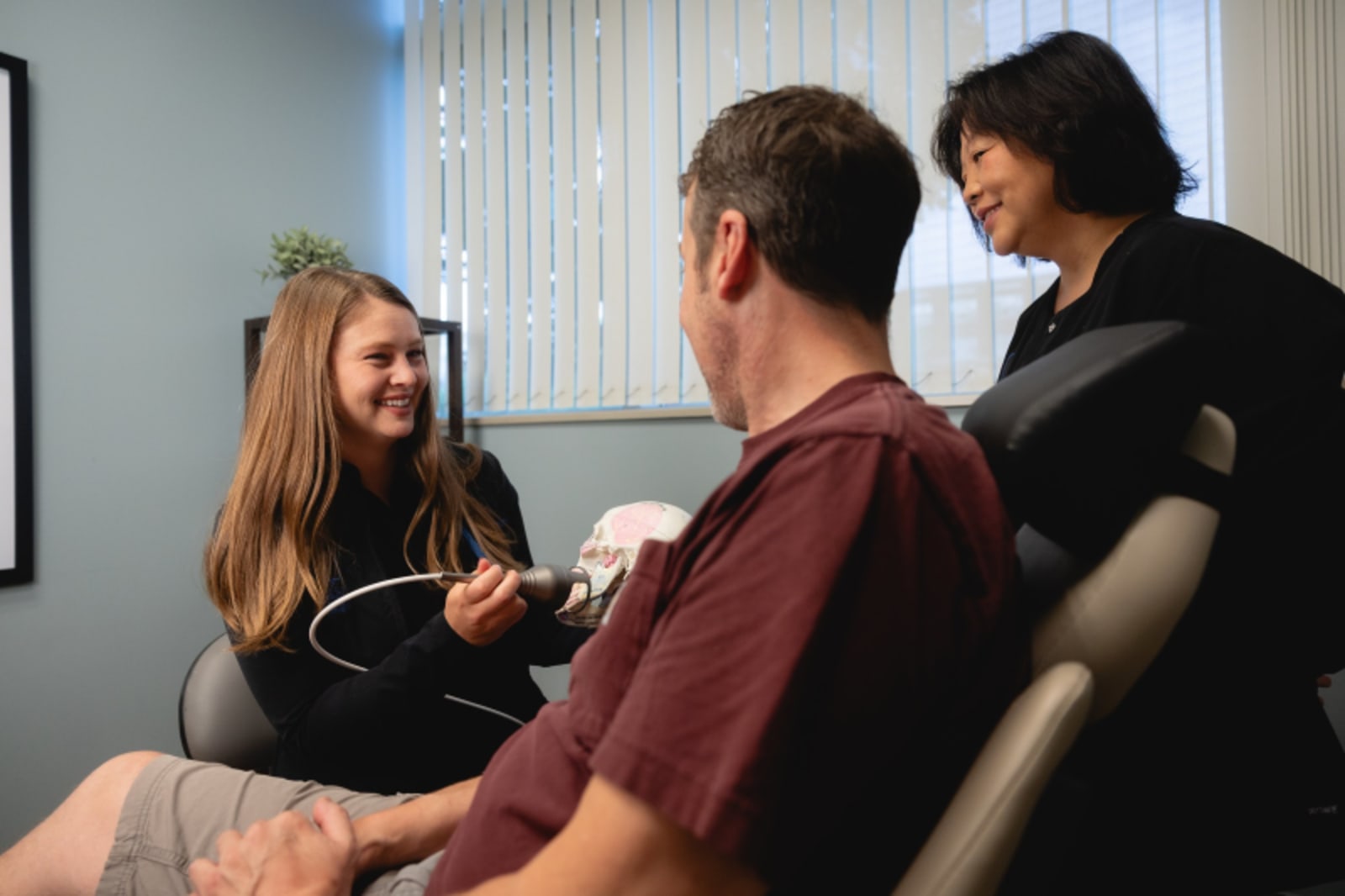
Every provider you have seen was probably doing their job correctly within their scope. The neurologist checked for neurological disease. The ENT checked the ears. Your dentist checked the teeth. Each ruled out their own territory and found nothing, which is an accurate answer to a narrow question. The problem is that TMD lives in the space between those territories, and nobody owns the space between.
What a comprehensive evaluation actually examines
An evaluation built for this kind of complexity is longer than a standard appointment because it has to be. It typically covers:
- A detailed history, including symptom timeline, prior treatments and their results, injuries, dental history, medications, and sleep.
- Hands-on examination of the joints and the muscles of the jaw, face, head, and neck, including palpation to identify which structures reproduce your familiar pain.
- Range of motion, joint mechanics, and how your bite loads the system.
- Cranial nerve screening and assessment of whether central sensitization is part of the picture.
- Airway and sleep screening.
- Advanced imaging where it will change decisions: CBCT to evaluate bone and joint architecture, MRI to visualize the disc and soft tissue.
The range of treatment across the field
Care for TMD starts with conservative, reversible approaches: patient education and habit change, jaw rest and diet modification, home exercise, physical therapy, orthopedic appliance therapy designed for the joint and muscles (a different device with a different purpose than a standard nightguard made to protect enamel), and medications.
Beyond that, the field includes therapeutic injections, photobiomodulation with therapeutic laser, myofunctional therapy, behavioral approaches for pain and sleep, airway-focused treatment including oral appliances or CPAP, airway and TMJ-focused orthodontics, and, in a small minority of cases, joint surgery. Which of these belongs in your plan depends entirely on what the evaluation finds, and a good plan usually combines several rather than betting everything on one.
Why collaboration is the point, not a bonus
Overlapping conditions need overlapping care. Working alongside physical therapists, orthodontists, myofunctional therapists, craniosacral therapists, sleep physicians, and your existing medical team is how a fragmented history gets turned into one coherent plan.
Where to start
You do not need a referral, a tidy diagnosis, or a polished summary of your history. Bring what you have, including the records and the loose ends.
Minnesota Craniofacial Center operates on a fee-for-service model rather than insurance contracts, specifically so the evaluation and the plan can be as thorough as your situation requires instead of being shaped by coverage exclusions. Costs and payment options are reviewed openly during your consultation.
Dr. Ledermann, Dr. Green, and Dr. Cervenka see people at our Saint Paul office at 2550 University Avenue West, Suite 143N, and you can reach us at (651) 642-1013. If you have been told nothing more can be done, we would like the chance to look again.