
Helpful Articles

TMJ Migraines & Ear Pain: Google Isn't Your Dentist

Dentist holding a skull model while discussing TMJ with a patient

When Your Jaw, Head, and Ears All Hurt at Once

If your jaw hurts, your ears feel full or start ringing, and you're also dealing with headaches or facial pressure, it can be difficult to know where to start looking for answers. You may have already had different appointments that may have addressed part of what you're experiencing, but you may still be left wondering whether these symptoms could be connected, and the truth is that they can be.

Temporomandibular joint disorders, commonly called TMJ disorders or TMD, can be associated with jaw pain, facial pain, headaches, ear symptoms, and discomfort that extends into the neck and surrounding areas. The challenge is that these symptoms can also occur with many other conditions, and more than one issue can exist at the same time.

Understanding what is actually contributing to your symptoms requires looking at the relationship between your jaw joints, muscles, bite, surrounding structures, and overall symptom history. At Minnesota Craniofacial Center, Dr. Ledermann and the team take that broader approach when evaluating people with complex jaw, facial, and head pain.

This guide explains why TMJ disorders can produce symptoms in areas that seem unrelated to your jaw, what other conditions can look similar, what a clinical evaluation involves, and when a craniofacial evaluation may be worth considering.

Key Takeaways

Minnesota Craniofacial Center team posing outside brick building entrance
  • TMJ disorders can be associated with jaw, facial, head, ear, and neck pain.
  • These symptoms can also be caused by many other conditions and are not specific to TMJ.
  • The jaw joints, muscles, and nerves are closely connected, which is why symptoms may be felt in multiple areas.
  • TMJ and other conditions (like migraine or sinus issues) can occur at the same time.
  • A proper evaluation looks at the whole system—not just one symptom—and may include imaging when needed.

Why TMJ Disorders Can Cause Symptoms Beyond Your Jaw

The temporomandibular joints are located on either side of your face, just in front of your ears. They connect your lower jaw to your skull and work constantly when you talk, chew, swallow, yawn, and move your jaw.

The joints themselves are only part of the picture. Your jaw is also surrounded by muscles, nerves, and other structures that interact with areas of your head, face, neck, and ears.

One of the most important connections involves the trigeminal nerve, a major sensory nerve responsible for much of the sensation in your face and head. Because the nervous system shares pathways between different areas, pain originating in one structure can sometimes be experienced somewhere else. This is known as referred pain.

That helps explain why a problem involving the jaw may not always feel like straightforward jaw pain.

Someone with a TMJ disorder may experience discomfort in the temples, cheeks, around the ears, or along the jawline. Muscle tension associated with jaw clenching or other jaw-related problems can also contribute to discomfort in the head and neck.

The important point is that symptoms outside the jaw do not automatically mean that a TMJ disorder is responsible. They simply make the relationship between your symptoms and the underlying structures worth evaluating more carefully.

Can TMJ Disorders Cause Ear Pain, Fullness, or Tinnitus?

The relationship between the jaw and ears can be particularly confusing. The temporomandibular joint sits immediately in front of the ear, and the two areas share some of the same nerve pathways. As a result, problems involving the jaw joint or surrounding muscles can sometimes be associated with symptoms that feel as though they are coming from the ear.

These may include ear pain, a feeling of fullness or pressure, or tinnitus, which describes sounds such as ringing, buzzing, or hissing without an external source.

This does not mean that every unexplained ear symptom is caused by TMD. Ear infections, hearing conditions, congestion, and other problems can produce similar symptoms and need to be considered appropriately.

However, if your ears have been examined and no clear ear-related explanation has been identified, it may be reasonable to ask whether your jaw could be contributing.

The connection can be especially worth exploring when ear symptoms occur alongside jaw tenderness, clicking or popping, difficulty opening your mouth, jaw fatigue, facial pain, or symptoms that change when you chew or move your jaw.

At Minnesota Craniofacial Center, these relationships are considered as part of a broader evaluation rather than treating the ear symptom in isolation.

Can TMJ Disorders Contribute to Headaches?

Headaches are another area where jaw-related symptoms and other conditions can overlap. The muscles involved in chewing include the masseter and temporalis muscles. The masseter runs along the side of your jaw, while the temporalis extends across the side of your head near your temples. Both can become tender or fatigued when the jaw muscles are repeatedly activated through chewing, clenching, or other habits.

Because these muscles and the surrounding nerves are connected to structures involved in head and facial sensation, jaw-related muscle tension can sometimes contribute to pain in the temples, forehead, or other areas of the head.

Some people also notice that their symptoms are worse when they wake up, particularly if they clench or grind their teeth during sleep.

That said, not every headache is related to the jaw, and a TMJ disorder should not be assumed simply because someone experiences both jaw pain and headaches. Migraine, tension-type headaches, cervicogenic headaches, and other neurological or medical conditions can have overlapping symptoms.

The goal of a proper evaluation is therefore not to make the jaw responsible for every headache. It is to determine whether the jaw, its muscles, or surrounding structures appear to be contributing to the symptoms you are experiencing.

What Other Symptoms Can Occur With TMJ Disorders?

TMJ disorders do not look exactly the same in everyone. Some people have noticeable pain around the jaw, while others primarily notice changes in how their jaw moves or symptoms in nearby areas.

Depending on the individual and the underlying problem, symptoms can include jaw pain or tenderness, clicking or popping, difficulty opening or closing the mouth comfortably, facial pain, headaches, ear-related symptoms, or discomfort that extends into the neck.

Some people also notice symptoms when they chew, yawn, or wake up after sleeping.

What matters is not whether you have a particular number of symptoms. It is the pattern they create and how those symptoms relate to the structures involved in jaw function.

For example, jaw discomfort combined with tenderness in the chewing muscles may point toward a different issue than isolated ear pain. Likewise, headaches that occur alongside significant jaw muscle tenderness or nighttime clenching may warrant a different line of investigation than headaches occurring without any jaw-related symptoms.

This is one reason symptom checklists can only take you so far. They can help you recognize patterns worth discussing with a provider, but they cannot determine what is actually causing your symptoms.

Conditions That Can Look Like TMJ Disorders

One of the most important things to understand about TMJ symptoms is that they are not unique to TMD. Ear conditions can cause pain, fullness, or changes in hearing. Sinus problems can create facial pressure. Neck disorders can contribute to headaches that radiate toward the head and face. Dental problems can cause localized pain that may be difficult to distinguish from discomfort in nearby structures. Headache disorders can also occur independently of jaw problems.

There is another complication: sometimes more than one condition is present.

Someone can have a genuine sinus problem and also experience jaw muscle pain. Someone can have migraine and also clench their teeth. Someone can have neck-related pain alongside a TMJ disorder.

That means the question is not simply, "Does this symptom sound like TMJ?" A better question is, "What combination of findings best explains what I am experiencing?"

That distinction matters because treating the wrong source of pain may provide little or only temporary relief. A thorough evaluation helps determine whether the jaw appears to be contributing, whether another condition needs to be considered, or whether multiple factors may be involved.

Why TMJ Diagnosis Requires Looking at the Whole Picture

Craniofacial pain can be difficult to categorize because the structures involved do not operate independently. Your jaw joints move with your muscles. Those muscles interact with your head and neck. Nerves carry sensory information across overlapping regions. Your symptoms can also change depending on how you sleep, chew, clench, move, or respond to discomfort.

This interconnectedness is one reason people with persistent symptoms sometimes see several different providers before receiving an explanation that accounts for the full pattern.

An ear specialist may appropriately focus on your ears. A neurologist may appropriately focus on your headaches. A dentist may appropriately evaluate your teeth and oral health. Each perspective can be valuable.

The challenge arises when symptoms cross those boundaries. A craniofacial evaluation provides an opportunity to consider those relationships together. Rather than looking only at where you feel pain, the clinician can evaluate the structures and patterns that may be contributing to it. At Minnesota Craniofacial Center, this broader perspective is central to the evaluation process.

What Happens During a TMJ Evaluation?
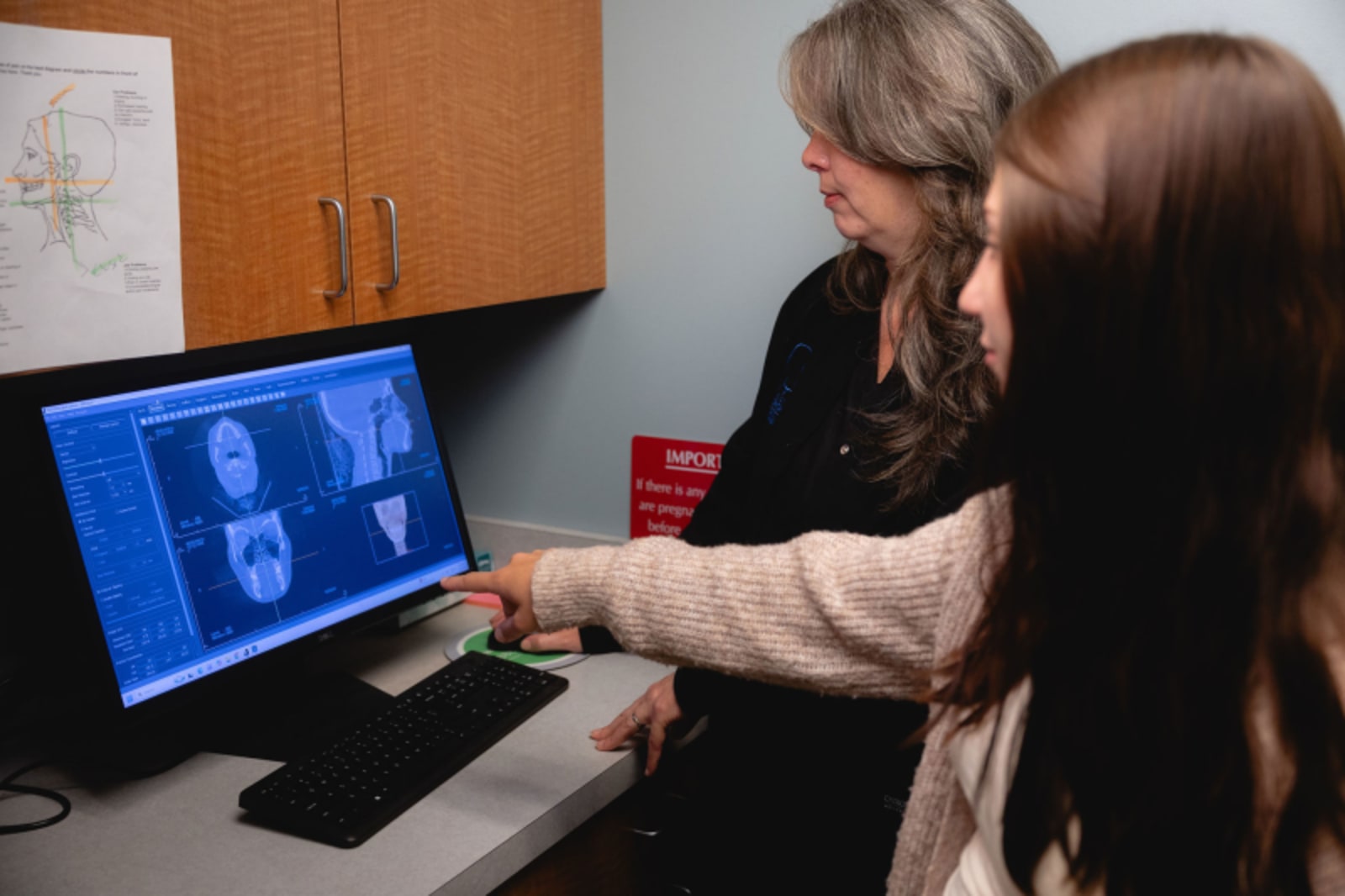
Craniofacial specialist pointing to imaging on computer screen during consultation

A TMJ evaluation is more than simply checking whether your jaw clicks. The first step is understanding your history. Your clinician may want to know when your symptoms began, where you experience discomfort, whether the symptoms change throughout the day, what activities make them better or worse, and what treatments or evaluations you have already undergone.

Your jaw function and surrounding structures may then be examined for findings that could help explain your symptoms. Depending on your situation, an evaluation may consider several areas:

  • Jaw joint function: The clinician may evaluate how your jaw opens and closes, whether movement is restricted, and whether clicking, popping, catching, or other changes occur during movement.
  • Muscle function: The muscles responsible for chewing, along with surrounding areas, may be evaluated for tenderness, tension, or other findings that could contribute to your symptoms.
  • Bite and dental relationships: How your teeth come together and how your jaw functions during movement may provide additional information about what is happening.
  • Symptom patterns: Your history can help connect physical findings to what you actually experience in daily life. When did the pain begin? What triggers it? Is it worse in the morning? Does chewing change it? Do headaches occur at the same time as jaw symptoms?
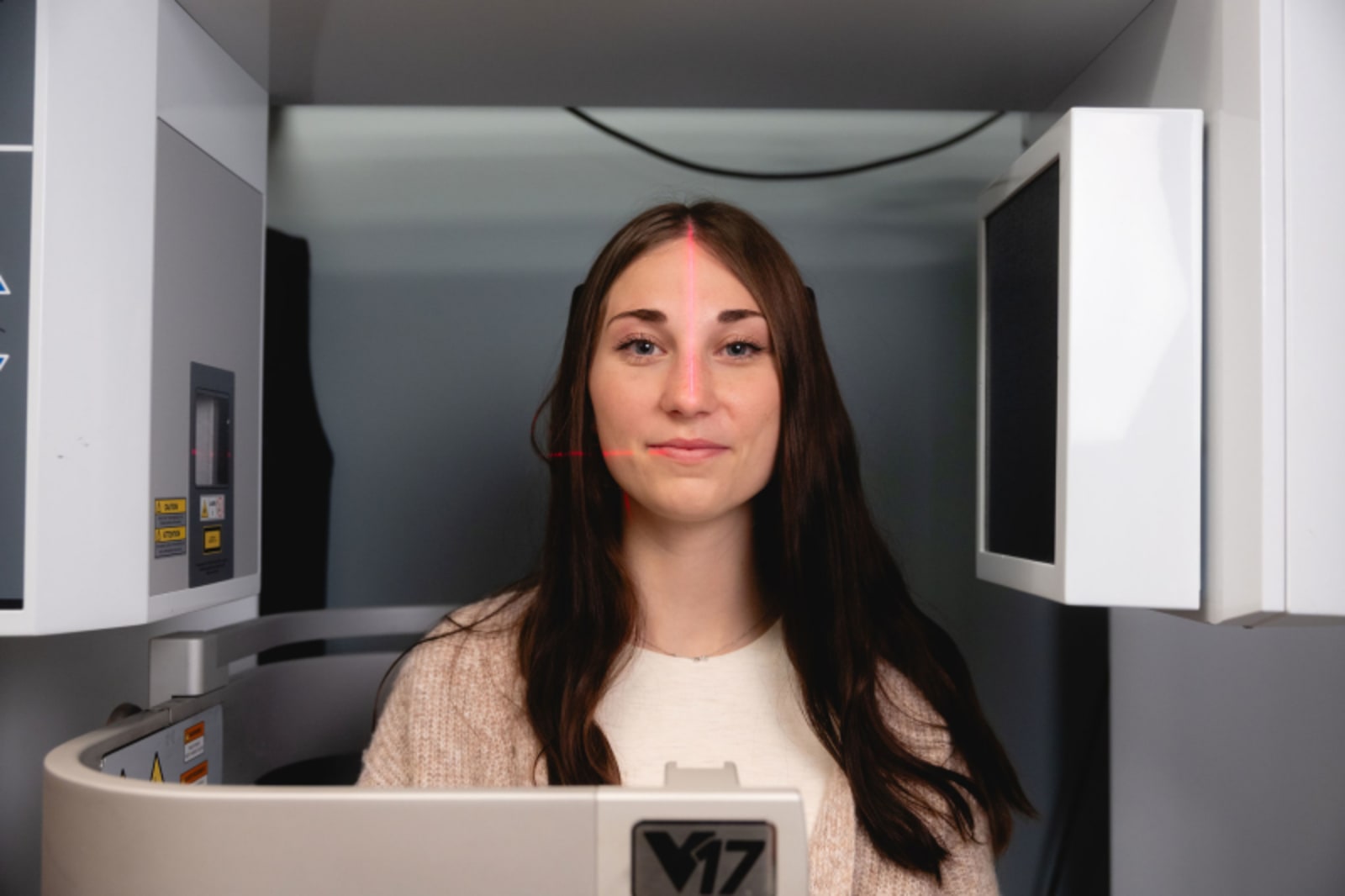
  • Imaging, when appropriate: Some problems cannot be fully evaluated through a physical examination alone. When indicated, imaging may provide additional information about the structures within or around the joint.

Not everyone needs the same evaluation or the same testing. The purpose is to gather enough information to understand your individual situation before deciding what, if anything, should happen next.

Why Treating Symptoms One at a Time May Not Always Solve the Problem

It can be frustrating to address one symptom only to have another remain. Perhaps your teeth have been checked, but the headaches continue. Maybe your ears have been evaluated, but the feeling of pressure remains. Perhaps physical therapy helped your neck temporarily, but the jaw discomfort returned.

That does not necessarily mean the previous treatment was wrong. Different providers are trained to evaluate different parts of the body, and many symptoms can legitimately have several possible causes. The difficulty comes when the symptoms are connected and the underlying relationships have not yet been considered together.

For someone experiencing a combination of jaw pain, headaches, ear symptoms, and facial or neck discomfort, looking at those symptoms as a complete pattern may provide information that is difficult to see when each symptom is considered separately.

That is where a craniofacial-focused evaluation can be useful. The goal is not to replace appropriate care from other specialists. It is to understand whether the jaw and surrounding structures are contributing to the overall picture and determine what role they may play.

When Should You Consider a Craniofacial Evaluation?

There is no single symptom that means you have a TMJ disorder, and you do not need to experience every symptom discussed on this page.

An evaluation may be worth considering if you have persistent or recurring jaw pain, difficulty with jaw movement, unexplained facial pain, headaches that occur alongside jaw symptoms, or ear-related symptoms without an obvious ear-related cause.

It may also make sense to seek another perspective when you have been treated for individual symptoms but still do not have a clear explanation for how everything fits together.

The purpose of an evaluation is not to confirm a diagnosis you found online. It is to determine whether your symptoms and clinical findings are consistent with a TMJ disorder or another craniofacial condition, and to help identify an appropriate path forward.

How to Prepare for Your First Appointment
Woman at reception desk preparing paperwork for first appointment

If you have already seen several providers, you may have more useful information than you realize. Bringing that information with you can help your clinician understand what has already been evaluated and what remains unresolved.

Consider bringing previous imaging, such as X-rays, CT scans, or MRIs, along with relevant medical or dental records. If you have seen specialists for your headaches, ears, neck, or teeth, notes from those visits may also provide helpful context.

You may also find it useful to write down a brief timeline of your symptoms. You do not need to document every sensation or remember every date. A simple overview of when your symptoms began, how they have changed, and what seems to trigger or relieve them can be enough to start the conversation.

Most importantly, bring your questions. If you have spent months or years trying to understand what is happening, it is reasonable to want an explanation that connects the dots.

Frequently Asked Questions

Can TMJ disorders cause ear pain?

Yes. Because the jaw joint sits near the ear, TMJ issues can cause ear pain or pressure. But ear symptoms can also have other causes, so evaluation is important.

Can TMJ disorders cause migraines?

They may contribute to headaches or facial pain, but not all migraines are related to TMJ. A proper evaluation is needed to determine the cause.

What does TMJ pain feel like?

It can vary from one person to the other, but often includes jaw joint pain, facial soreness, temple headaches, or muscle tenderness when chewing or moving the jaw.

How do I know if my ear pain is from TMJ or an ear problem?

Symptoms sometimes overlap, so you can’t tell from symptoms alone. Both ear and TMJ evaluations may be needed to find the cause.

Do I need an MRI or CT scan to diagnose TMJ?

Not always. Many cases are diagnosed through exam alone, but imaging may be helpful if more detail about the joint is needed.

Can TMJ disorders and other conditions occur at the same time?

Yes. TMJ issues can exist alongside migraines, sinus problems, neck pain, or ear conditions, which is why full evaluation matters.

When should I see a TMJ or craniofacial specialist?

If you have ongoing jaw pain, facial pain, headaches with jaw symptoms, or unexplained ear issues, an evaluation can help identify the cause.

A More Complete Look at Jaw, Head, and Facial Pain

When your jaw, head, ears, and face all seem to be involved, it can be tempting to search for a single symptom that will tell you exactly what is wrong. Unfortunately, craniofacial pain is rarely that simple.

TMJ disorders can be associated with symptoms that extend well beyond the jaw, but those same symptoms can occur with many other conditions. That is why the most useful next step is not trying to diagnose yourself from a list of symptoms. It is having the full pattern evaluated by someone who understands how the jaw, muscles, nerves, and surrounding structures interact.

At Minnesota Craniofacial Center, Dr. Ledermann and the team take that broader approach to evaluating complex jaw, facial, and head pain. If you are ready to understand what may be contributing to your symptoms, you can learn more about the new patient process or contact the Saint Paul office at (651) 642-1013.

You do not need to have the answer before you schedule an evaluation. Understanding what is happening is the reason for the evaluation in the first place.

When Your Jaw, Head, and Ears All Hurt at Once

If your jaw hurts, your ears feel full or start ringing, and you're also dealing with headaches or facial pressure, it can be difficult to know where to start looking for answers. You may have already had different appointments that may have addressed part of what you're experiencing, but you may still be left wondering whether these symptoms could be connected, and the truth is that they can be.

Temporomandibular joint disorders, commonly called TMJ disorders or TMD, can be associated with jaw pain, facial pain, headaches, ear symptoms, and discomfort that extends into the neck and surrounding areas. The challenge is that these symptoms can also occur with many other conditions, and more than one issue can exist at the same time.

Understanding what is actually contributing to your symptoms requires looking at the relationship between your jaw joints, muscles, bite, surrounding structures, and overall symptom history. At Minnesota Craniofacial Center, Dr. Ledermann and the team take that broader approach when evaluating people with complex jaw, facial, and head pain.

This guide explains why TMJ disorders can produce symptoms in areas that seem unrelated to your jaw, what other conditions can look similar, what a clinical evaluation involves, and when a craniofacial evaluation may be worth considering.

Key Takeaways

Minnesota Craniofacial Center team posing outside brick building entrance
  • TMJ disorders can be associated with jaw, facial, head, ear, and neck pain.
  • These symptoms can also be caused by many other conditions and are not specific to TMJ.
  • The jaw joints, muscles, and nerves are closely connected, which is why symptoms may be felt in multiple areas.
  • TMJ and other conditions (like migraine or sinus issues) can occur at the same time.
  • A proper evaluation looks at the whole system—not just one symptom—and may include imaging when needed.

Why TMJ Disorders Can Cause Symptoms Beyond Your Jaw

The temporomandibular joints are located on either side of your face, just in front of your ears. They connect your lower jaw to your skull and work constantly when you talk, chew, swallow, yawn, and move your jaw.

The joints themselves are only part of the picture. Your jaw is also surrounded by muscles, nerves, and other structures that interact with areas of your head, face, neck, and ears.

One of the most important connections involves the trigeminal nerve, a major sensory nerve responsible for much of the sensation in your face and head. Because the nervous system shares pathways between different areas, pain originating in one structure can sometimes be experienced somewhere else. This is known as referred pain.

That helps explain why a problem involving the jaw may not always feel like straightforward jaw pain.

Someone with a TMJ disorder may experience discomfort in the temples, cheeks, around the ears, or along the jawline. Muscle tension associated with jaw clenching or other jaw-related problems can also contribute to discomfort in the head and neck.

The important point is that symptoms outside the jaw do not automatically mean that a TMJ disorder is responsible. They simply make the relationship between your symptoms and the underlying structures worth evaluating more carefully.

Can TMJ Disorders Cause Ear Pain, Fullness, or Tinnitus?

The relationship between the jaw and ears can be particularly confusing. The temporomandibular joint sits immediately in front of the ear, and the two areas share some of the same nerve pathways. As a result, problems involving the jaw joint or surrounding muscles can sometimes be associated with symptoms that feel as though they are coming from the ear.

These may include ear pain, a feeling of fullness or pressure, or tinnitus, which describes sounds such as ringing, buzzing, or hissing without an external source.

This does not mean that every unexplained ear symptom is caused by TMD. Ear infections, hearing conditions, congestion, and other problems can produce similar symptoms and need to be considered appropriately.

However, if your ears have been examined and no clear ear-related explanation has been identified, it may be reasonable to ask whether your jaw could be contributing.

The connection can be especially worth exploring when ear symptoms occur alongside jaw tenderness, clicking or popping, difficulty opening your mouth, jaw fatigue, facial pain, or symptoms that change when you chew or move your jaw.

At Minnesota Craniofacial Center, these relationships are considered as part of a broader evaluation rather than treating the ear symptom in isolation.

Can TMJ Disorders Contribute to Headaches?

Headaches are another area where jaw-related symptoms and other conditions can overlap. The muscles involved in chewing include the masseter and temporalis muscles. The masseter runs along the side of your jaw, while the temporalis extends across the side of your head near your temples. Both can become tender or fatigued when the jaw muscles are repeatedly activated through chewing, clenching, or other habits.

Because these muscles and the surrounding nerves are connected to structures involved in head and facial sensation, jaw-related muscle tension can sometimes contribute to pain in the temples, forehead, or other areas of the head.

Some people also notice that their symptoms are worse when they wake up, particularly if they clench or grind their teeth during sleep.

That said, not every headache is related to the jaw, and a TMJ disorder should not be assumed simply because someone experiences both jaw pain and headaches. Migraine, tension-type headaches, cervicogenic headaches, and other neurological or medical conditions can have overlapping symptoms.

The goal of a proper evaluation is therefore not to make the jaw responsible for every headache. It is to determine whether the jaw, its muscles, or surrounding structures appear to be contributing to the symptoms you are experiencing.

What Other Symptoms Can Occur With TMJ Disorders?

TMJ disorders do not look exactly the same in everyone. Some people have noticeable pain around the jaw, while others primarily notice changes in how their jaw moves or symptoms in nearby areas.

Depending on the individual and the underlying problem, symptoms can include jaw pain or tenderness, clicking or popping, difficulty opening or closing the mouth comfortably, facial pain, headaches, ear-related symptoms, or discomfort that extends into the neck.

Some people also notice symptoms when they chew, yawn, or wake up after sleeping.

What matters is not whether you have a particular number of symptoms. It is the pattern they create and how those symptoms relate to the structures involved in jaw function.

For example, jaw discomfort combined with tenderness in the chewing muscles may point toward a different issue than isolated ear pain. Likewise, headaches that occur alongside significant jaw muscle tenderness or nighttime clenching may warrant a different line of investigation than headaches occurring without any jaw-related symptoms.

This is one reason symptom checklists can only take you so far. They can help you recognize patterns worth discussing with a provider, but they cannot determine what is actually causing your symptoms.

Conditions That Can Look Like TMJ Disorders

One of the most important things to understand about TMJ symptoms is that they are not unique to TMD. Ear conditions can cause pain, fullness, or changes in hearing. Sinus problems can create facial pressure. Neck disorders can contribute to headaches that radiate toward the head and face. Dental problems can cause localized pain that may be difficult to distinguish from discomfort in nearby structures. Headache disorders can also occur independently of jaw problems.

There is another complication: sometimes more than one condition is present.

Someone can have a genuine sinus problem and also experience jaw muscle pain. Someone can have migraine and also clench their teeth. Someone can have neck-related pain alongside a TMJ disorder.

That means the question is not simply, "Does this symptom sound like TMJ?" A better question is, "What combination of findings best explains what I am experiencing?"

That distinction matters because treating the wrong source of pain may provide little or only temporary relief. A thorough evaluation helps determine whether the jaw appears to be contributing, whether another condition needs to be considered, or whether multiple factors may be involved.

Why TMJ Diagnosis Requires Looking at the Whole Picture

Craniofacial pain can be difficult to categorize because the structures involved do not operate independently. Your jaw joints move with your muscles. Those muscles interact with your head and neck. Nerves carry sensory information across overlapping regions. Your symptoms can also change depending on how you sleep, chew, clench, move, or respond to discomfort.

This interconnectedness is one reason people with persistent symptoms sometimes see several different providers before receiving an explanation that accounts for the full pattern.

An ear specialist may appropriately focus on your ears. A neurologist may appropriately focus on your headaches. A dentist may appropriately evaluate your teeth and oral health. Each perspective can be valuable.

The challenge arises when symptoms cross those boundaries. A craniofacial evaluation provides an opportunity to consider those relationships together. Rather than looking only at where you feel pain, the clinician can evaluate the structures and patterns that may be contributing to it. At Minnesota Craniofacial Center, this broader perspective is central to the evaluation process.

What Happens During a TMJ Evaluation?

Craniofacial specialist pointing to imaging on computer screen during consultation

A TMJ evaluation is more than simply checking whether your jaw clicks. The first step is understanding your history. Your clinician may want to know when your symptoms began, where you experience discomfort, whether the symptoms change throughout the day, what activities make them better or worse, and what treatments or evaluations you have already undergone.

Your jaw function and surrounding structures may then be examined for findings that could help explain your symptoms. Depending on your situation, an evaluation may consider several areas:

  • Jaw joint function: The clinician may evaluate how your jaw opens and closes, whether movement is restricted, and whether clicking, popping, catching, or other changes occur during movement.
  • Muscle function: The muscles responsible for chewing, along with surrounding areas, may be evaluated for tenderness, tension, or other findings that could contribute to your symptoms.
  • Bite and dental relationships: How your teeth come together and how your jaw functions during movement may provide additional information about what is happening.
  • Symptom patterns: Your history can help connect physical findings to what you actually experience in daily life. When did the pain begin? What triggers it? Is it worse in the morning? Does chewing change it? Do headaches occur at the same time as jaw symptoms?
  • Imaging, when appropriate: Some problems cannot be fully evaluated through a physical examination alone. When indicated, imaging may provide additional information about the structures within or around the joint.

Not everyone needs the same evaluation or the same testing. The purpose is to gather enough information to understand your individual situation before deciding what, if anything, should happen next.

Why Treating Symptoms One at a Time May Not Always Solve the Problem

It can be frustrating to address one symptom only to have another remain. Perhaps your teeth have been checked, but the headaches continue. Maybe your ears have been evaluated, but the feeling of pressure remains. Perhaps physical therapy helped your neck temporarily, but the jaw discomfort returned.

That does not necessarily mean the previous treatment was wrong. Different providers are trained to evaluate different parts of the body, and many symptoms can legitimately have several possible causes. The difficulty comes when the symptoms are connected and the underlying relationships have not yet been considered together.

For someone experiencing a combination of jaw pain, headaches, ear symptoms, and facial or neck discomfort, looking at those symptoms as a complete pattern may provide information that is difficult to see when each symptom is considered separately.

That is where a craniofacial-focused evaluation can be useful. The goal is not to replace appropriate care from other specialists. It is to understand whether the jaw and surrounding structures are contributing to the overall picture and determine what role they may play.

When Should You Consider a Craniofacial Evaluation?

There is no single symptom that means you have a TMJ disorder, and you do not need to experience every symptom discussed on this page.

An evaluation may be worth considering if you have persistent or recurring jaw pain, difficulty with jaw movement, unexplained facial pain, headaches that occur alongside jaw symptoms, or ear-related symptoms without an obvious ear-related cause.

It may also make sense to seek another perspective when you have been treated for individual symptoms but still do not have a clear explanation for how everything fits together.

The purpose of an evaluation is not to confirm a diagnosis you found online. It is to determine whether your symptoms and clinical findings are consistent with a TMJ disorder or another craniofacial condition, and to help identify an appropriate path forward.

How to Prepare for Your First Appointment

Woman at reception desk preparing paperwork for first appointment

If you have already seen several providers, you may have more useful information than you realize. Bringing that information with you can help your clinician understand what has already been evaluated and what remains unresolved.

Consider bringing previous imaging, such as X-rays, CT scans, or MRIs, along with relevant medical or dental records. If you have seen specialists for your headaches, ears, neck, or teeth, notes from those visits may also provide helpful context.

You may also find it useful to write down a brief timeline of your symptoms. You do not need to document every sensation or remember every date. A simple overview of when your symptoms began, how they have changed, and what seems to trigger or relieve them can be enough to start the conversation.

Most importantly, bring your questions. If you have spent months or years trying to understand what is happening, it is reasonable to want an explanation that connects the dots.

Frequently Asked Questions

Can TMJ disorders cause ear pain?

Yes. Because the jaw joint sits near the ear, TMJ issues can cause ear pain or pressure. But ear symptoms can also have other causes, so evaluation is important.

Can TMJ disorders cause migraines?

They may contribute to headaches or facial pain, but not all migraines are related to TMJ. A proper evaluation is needed to determine the cause.

What does TMJ pain feel like?

It can vary from one person to the other, but often includes jaw joint pain, facial soreness, temple headaches, or muscle tenderness when chewing or moving the jaw.

How do I know if my ear pain is from TMJ or an ear problem?

Symptoms sometimes overlap, so you can’t tell from symptoms alone. Both ear and TMJ evaluations may be needed to find the cause.

Do I need an MRI or CT scan to diagnose TMJ?

Not always. Many cases are diagnosed through exam alone, but imaging may be helpful if more detail about the joint is needed.

Can TMJ disorders and other conditions occur at the same time?

Yes. TMJ issues can exist alongside migraines, sinus problems, neck pain, or ear conditions, which is why full evaluation matters.

When should I see a TMJ or craniofacial specialist?

If you have ongoing jaw pain, facial pain, headaches with jaw symptoms, or unexplained ear issues, an evaluation can help identify the cause.

A More Complete Look at Jaw, Head, and Facial Pain

When your jaw, head, ears, and face all seem to be involved, it can be tempting to search for a single symptom that will tell you exactly what is wrong. Unfortunately, craniofacial pain is rarely that simple.

TMJ disorders can be associated with symptoms that extend well beyond the jaw, but those same symptoms can occur with many other conditions. That is why the most useful next step is not trying to diagnose yourself from a list of symptoms. It is having the full pattern evaluated by someone who understands how the jaw, muscles, nerves, and surrounding structures interact.

At Minnesota Craniofacial Center, Dr. Ledermann and the team take that broader approach to evaluating complex jaw, facial, and head pain. If you are ready to understand what may be contributing to your symptoms, you can learn more about the new patient process or contact the Saint Paul office at (651) 642-1013.

You do not need to have the answer before you schedule an evaluation. Understanding what is happening is the reason for the evaluation in the first place.

FeelYour Best.

Please call (651) 642-1013 or request an appointment online to set up your first visit. We’ll be in touch soon.